

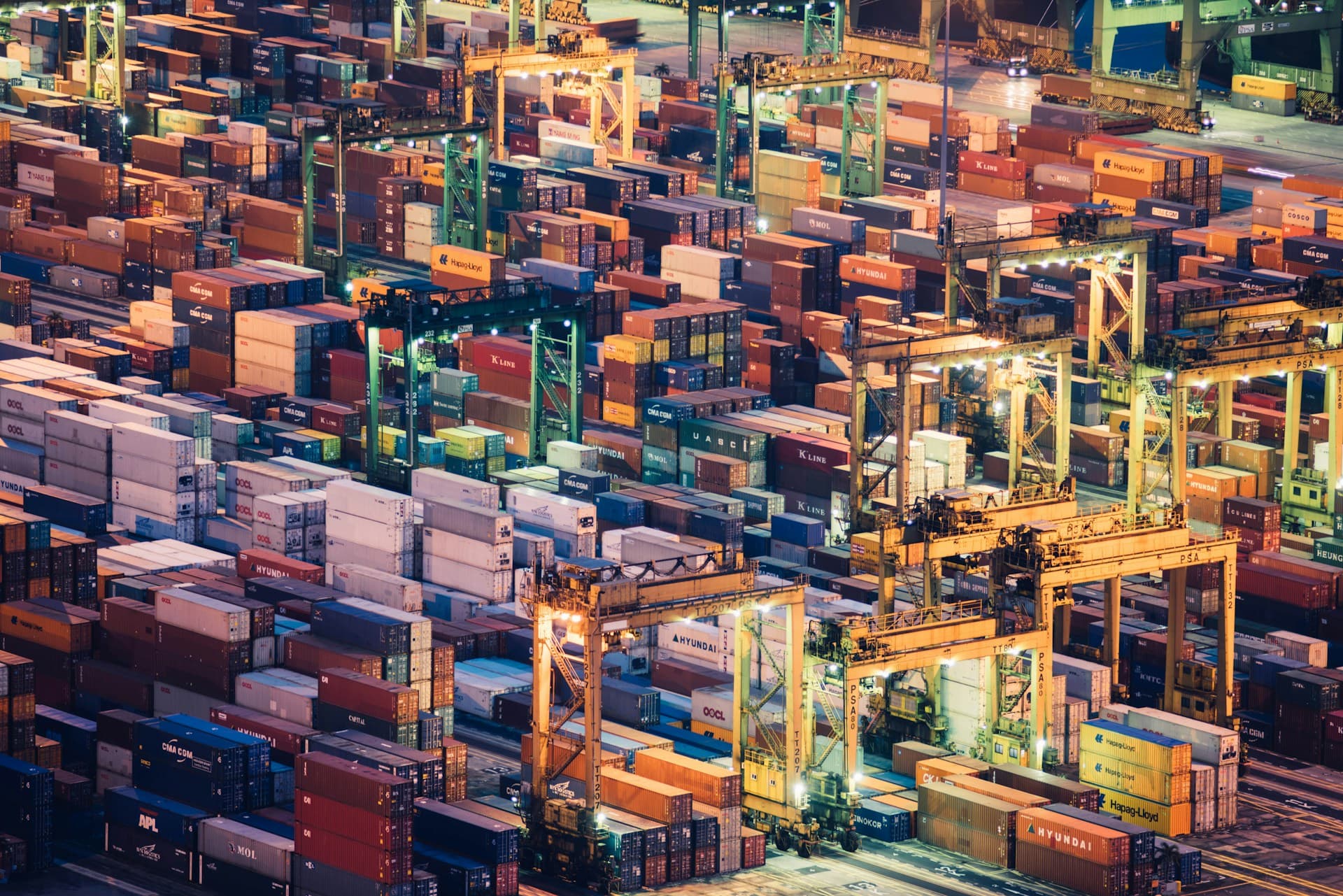
As an exporter in a small country that’s hugely reliant on international shipping lines, you’re most likely feeling the impact of global supply chain disruptions: longer transit times, decreased service levels and skyrocketing costs.
There are steps you can take to mitigate the impact of disruptions and strengthen your supply chain.
3 Ways to Strengthen Your Supply Chain
Make Simplification a Key Strategy
The 2020 pandemic prompted many companies that ranked top in global supply chains (e.g. Procter & Gamble, Johnson & Johnson and Pepsi) to simplify their businesses by cutting their SKUs by up to 30%.
Toyota, for example, reduced the number of cars produced to its most important models, due to global supply constraints and disruptions.
Simplify Your Business With the ABC or Pareto Analysis
The ABC analysis is a good way to identify your most important SKUs.
“Take a year’s worth of data showing the annual profitability of your SKUs*. Most businesses find ~20% of their SKUs drive ~80% of their profit (the ‘80/20 rule’). These become your ‘A’ SKUs: the ones you always want to have in stock, no matter what. This should be ensured at every stocking point through your inventory-management policies. You’ll have different limits and levels for your ‘B’ and ‘C’ SKUs.”
Some SKUs may even be losing you money. These are often called your ‘D’ SKUs or SLOB (Slow Moving and Obsolete) stock. You need to either quickly return them to profit or get rid of them.
Note: Most ABC analysis sites suggest you use revenue $, but this ignores the cost of sourcing, manufacturing and getting products to market. Profit $ or (at a minimum) GM $ are often more relevant.
Re-Position Your Supply Chain for a Different World
Many exporters have weathered global supply chain disruptions and high costs by increasing inventory and working capital levels, but assessing your supply chain through a Lean manufacturing lens is a good idea.
“Inflationary pressures, geopolitical tension, and other factors are impacting domestic and global supply chains. Some businesses are also reporting softening demand in offshore markets.
“Assess whether your supply chain is fit for purpose to meet these changing conditions. For some, it may be relevant to think about repositioning your supply chain from being one that focuses on supporting growth (almost at any cost) to one that focuses on reducing costs and protecting profits.
“One way to achieve this is to view your supply chain through a ‘lean lens’. Look at where waste exists in your business, prioritise the areas that will have the greatest impact or speed of implementation, and put plans in place to reduce or remove this waste.”
Build Your Supply Chain Capability
A reliable supply chain is crucial for growing your business, so it’s important to have the right skills in place. Christie suggests bringing in new talent or developing your people internally to grow supply chain knowledge.
“Every business founder or CEO can say where they want their business to be in 5 years’ time, often in terms of dollars, market or product range. However, most can’t say what their supply chain needs to look like to support this. Supply chains don’t move dollars, they move units, so you need to understand volumetric measures of your supply chain.
“Look at your 3–5 year plan and volumise it. Where is growth likely to be constrained? Is it by supplier capabilities and capacities, or your own internal capabilities and capacities? Where can the supply chain better support and enable your growth aspirations?”
Steps for Mitigating Disruptions
Review the Design of Your Global Supply Chain
Most Kiwi exporters import raw materials, parts or product from overseas, convert them to finished goods in New Zealand, then export them to offshore markets. This supply chain design is risky, given our inability to influence global shipping lines and our distance from key international markets.
It’s important to review your end-to-end supply chain to identify the main areas of risk and exposure. These could include:
Source
Where raw materials, parts or products come from — not just tier 1 suppliers, but tiers 2 and 3, especially for your ‘A’ SKUs.
Location
Where the manufacturing process takes place — considering things like rules of origin, tariff rates, capacity, capability and ability to respond to offshore market changes and demands.
Trade-offs
How your business manages these across the extended supply chain, i.e. balancing supply with demand, inventory locations with levels, or financial performance with business priorities.
Channels
The different channels to market and their costs and complexities.
Requirements
The people, capabilities, processes and systems required across the supply chain to ensure it delivers what your business needs.
Related Reading
Original source: Strengthening your supply chain — tips from expert Dave Christie — myNZTE, New Zealand Trade and Enterprise. Reviewed 17 December 2025.