


Why You Need a Supply Chain Strategy
Most New Zealand exporters lack the scale or influence to drive change in the global shipping sector or ports. And this is where so much of the supply chain pain has come from in the last few years. However, your supply chain strategy is something you can control and get real value out of.
The right supply chain strategies for your business will help:
Often in small businesses, key decisions are made by a handful of people sitting around a table. Your supply chain strategy must be a topic of focus, alongside the rest of your strategy planning, be it marketing, sales, finance, HR, and more.
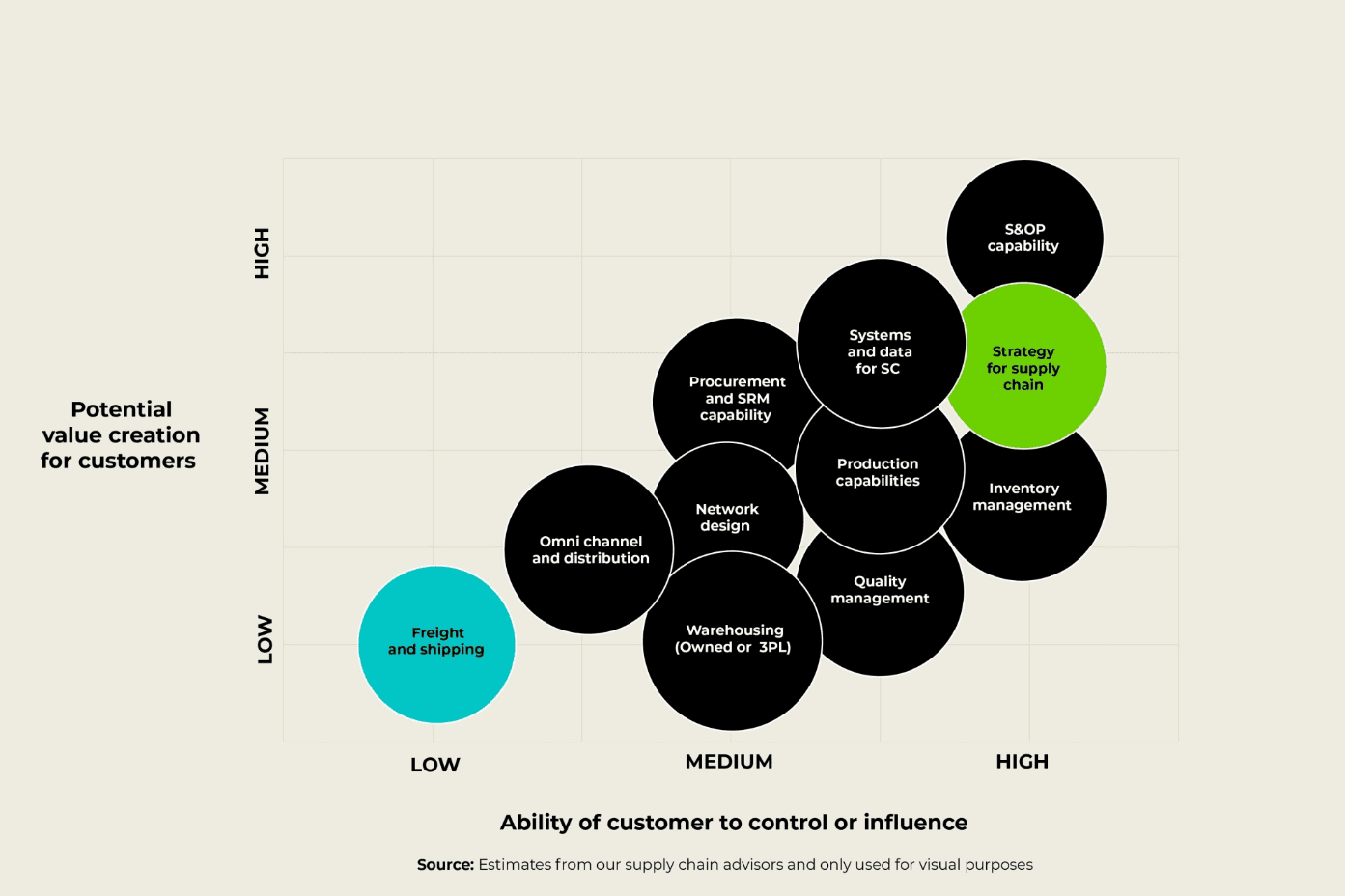
What Is a Supply Chain Strategy?
Most businesses can talk about how they want to grow, what they want to achieve, how they will market their product, and who their customers are — but very few can explain what their supply chain should look like to achieve this growth.
“A supply chain strategy is ‘how’ to achieve your overarching business strategy and goals.”
Key indicator
One indicator that your supply chain needs work is if you have a one-size-fits-all approach to it for every one of your products, customers, and sales channels. Businesses with leading supply chains recognise that they need to differentiate their supply chain to meet the different and varied needs of customers, channels, and products.
How to Create a Supply Chain Strategy
Think of your supply chain strategy as a 3- to 5-year journey. If your business strategy has a 5-year horizon, your supply chain strategy needs to be the same.
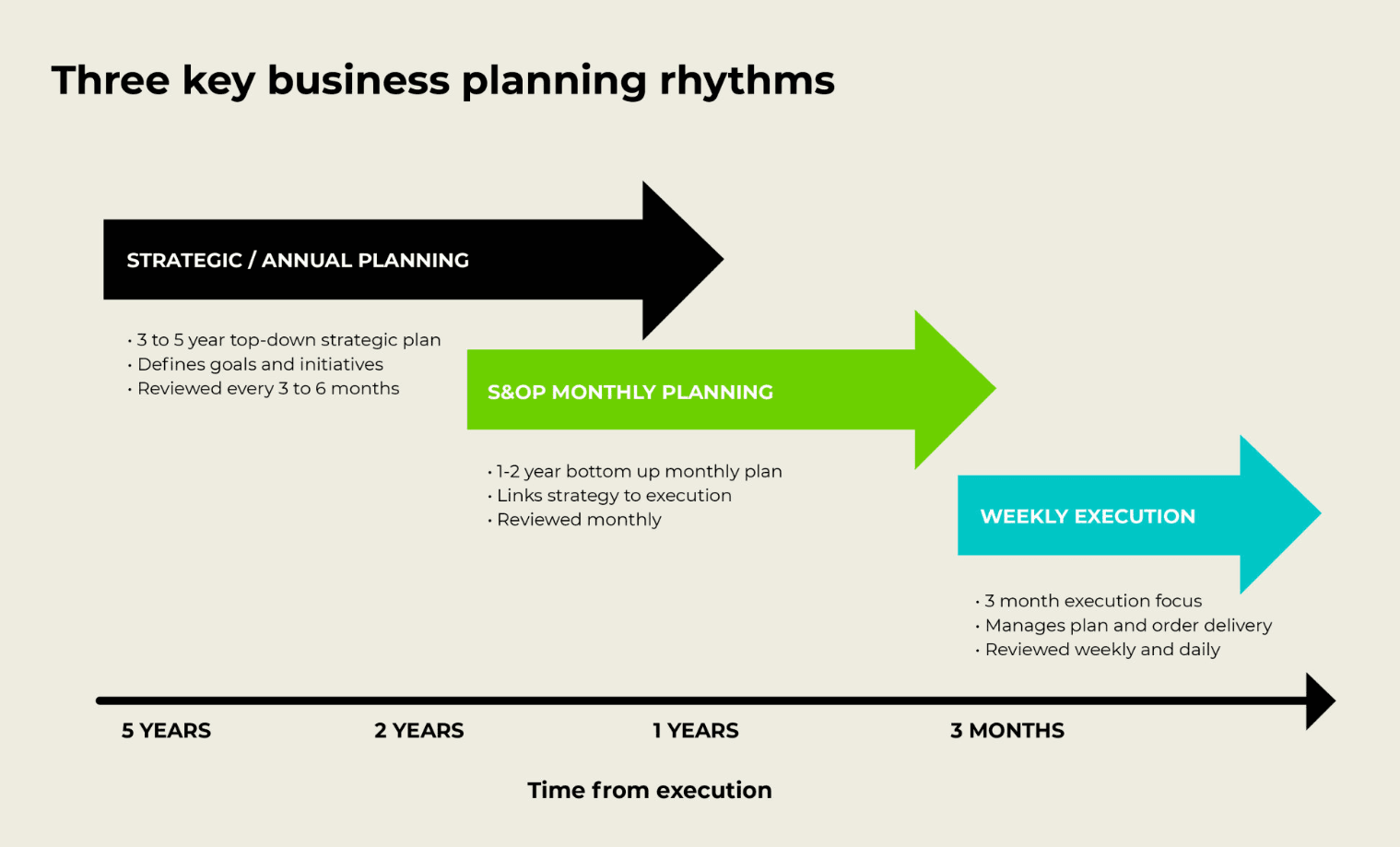
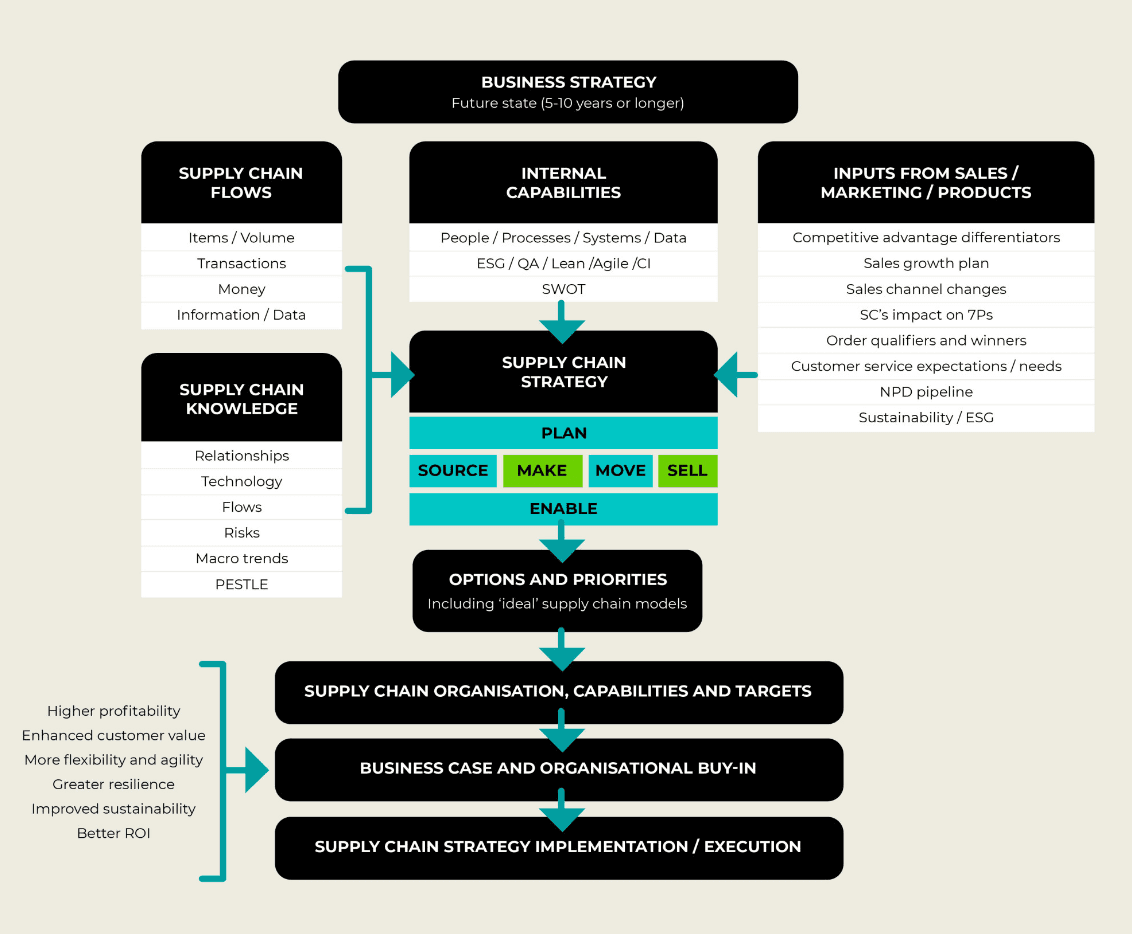
To create your supply chain strategy, consider:
01.Start with Your Business Strategy
Where does your business want to be in 5–10 years? From a supply chain perspective, the longer you can see over the horizon, the better.
02.Consider Your "Flows"
Most business strategies tell you in dollars where a company will be in 3–5 years. From a supply chain perspective, dollars are almost irrelevant. You need to know the units or volume. Convert dollars into volume metrics meaningful for your business — metric tonnes, cartons, litres. This will show where your supply chain could limit or constrain your business growth.
03.Gather Your Inputs
Information from your sales, marketing, and product teams: growth plans, changes to sales channels, plans to introduce new products, order qualifiers and winners, and customer service expectations. How might your supply chain impact these?
04.Assess Your Capability
Your people, processes, systems, data, and SWOT analysis. Ask: How does our supply chain need to support and enable our business’s growth strategy? What areas do we need to focus on right now? Where’s the most risk? Where are the quick wins?
Consider your business transactions. Many businesses decide they want to include an online channel, which means smaller, more frequent orders, so your transactions will go up and your costs will too. The average dollar sale value online is typically a lot lower than B2B sales, yet the cost to transact the order is often similar.
Customer service expectations vary by market. In New Zealand, people often happily accept a 24–48-hour delivery lead time for an online order. But in the main US cities, it’s about 2–4 hours. Your supply chain design must account for these differences.
Once you understand the broader context, you need to take the people in your business on the journey to help them understand how your supply chain can help you compete and win. This is where tools like “the case for change” and business case can be used.
What Good Looks Like: Gartner Research
Global market research firm Gartner runs an annual survey of leading businesses that demonstrate excellence across their supply chain. In 2022, Cisco Systems topped the list for the third year in a row. The survey identified three key characteristics of leading supply chains:
Differentiated Strategies
They have differentiated supply chain strategies tailored to different customers, channels, and products.
Digitisation & Technology
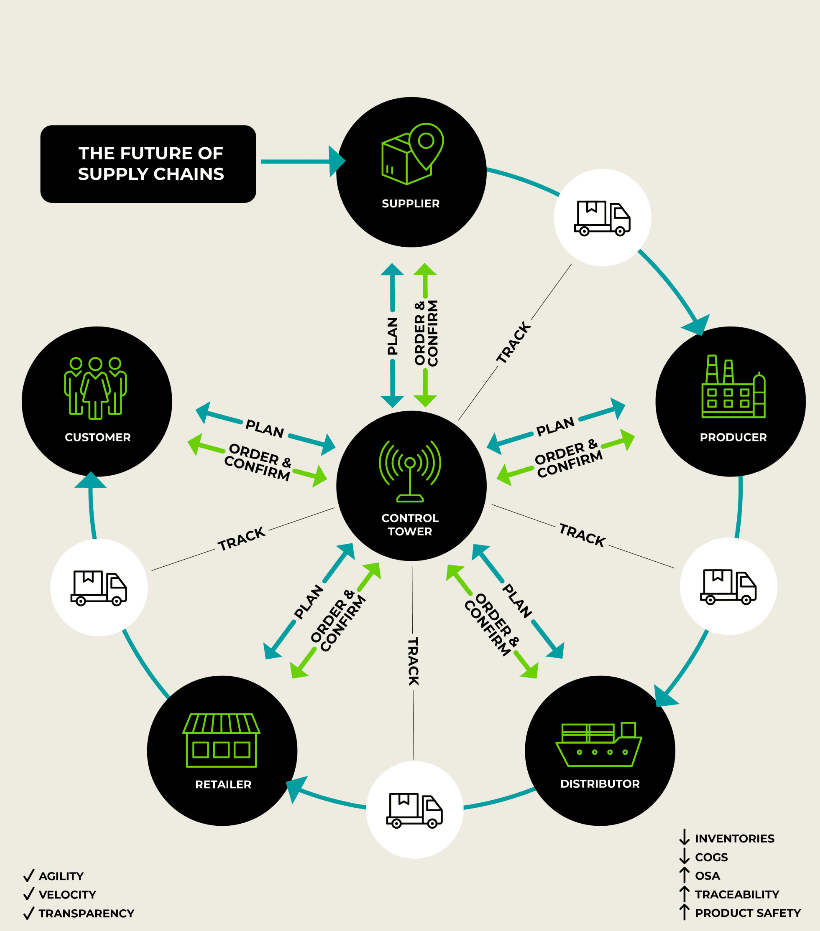
They embraced digitisation and technology to drive visibility, efficiency, and decision-making.
Sustainability Focus
They focused on sustainability — net zero carbon emissions across their extended supply chain.
Sustainability in Practice: Cotopaxi
Cotopaxi is a well-known American adventure clothing brand focused on sustainability. Initially they focused on packaging and last-mile delivery. But after conducting a carbon footprint audit, they realised approximately 80% of their carbon came from the front-end of their supply chain — sourcing raw materials and manufacturing.
They switched their sustainability focus to those areas. The lesson for NZ businesses: audit first, then target your sustainability efforts where the data tells you they’ll have the most impact.
NZ Exporters Improving Their Supply Chain Strategies
Here are three examples of New Zealand exporters who made targeted supply chain strategy changes with significant results:
Recreational Products Company
Freed up their supply chain by changing from 100% make-to-order to including 20% make-to-stock for core products. The result: higher margins, shorter lead times, and reduced inventory.
Feminine-Hygiene Manufacturer
Found a new 3PL partner that could accelerate market penetration through their existing network — unlocking growth without building their own distribution infrastructure.
High-End Packaging Company
Segmented their customers and suppliers, diversified production out of China, and focused on quality assurance — reducing risk while improving service.
Where to Start
Start by converting your revenue targets into volume flows. This simple exercise reveals where your supply chain could constrain your growth. Then assess your capability — people, processes, systems, and data. The gap between where you are and where you need to be is your supply chain strategy.
Take a SC Maturity Assessment