


Why Now?
Major global retailers including Walmart and Decathlon now mandate RFID tags on all shipped products. The technology that was once expensive and bespoke is becoming standard infrastructure.
But RFID adoption in New Zealand has historically faced two obstacles:
Cost barrier
Historically expensive, bespoke solutions limited to large organisations with narrow use cases, forcing either expensive custom development or application proliferation.
Skills gap
RFID requires specialised electronics engineering skills focused on achieving 100% readability. Standard IT approaches consistently fail to meet organisational needs.
Both barriers have shifted. Zebra, the global location technology leader, developed MotionWorks Enterprise (MWE) — a rules engine that automates location-based workflows through integration with existing systems. Synergic Technologies is Zebra’s certified New Zealand partner for MWE implementation.
The Building Blocks of RFID
Understanding these three layers is the starting point for any RFID project.
Rules Engine (MWE)
Large organisations need a single RFID rules engine handling all RFID, GPS, and barcode records. Zebra’s MotionWorks Enterprise converts trillions of presence notices into system records or exception alerts — functionality that standard databases and commercial IoT platforms cannot manage.
Key advantages:
- Most location-based workflows can be coded within the rules engine with integration, eliminating the need for multiple applications or expensive custom development
- Collated data enables advanced analytics and workflow improvement — data importance increases with AI implementation
- Exact location and movement mapped across facilities
- Benefits expand as Zebra adds new capabilities: temperature, humidity, pressure, and torsion sensors
- Point RFID trials often stall without an enterprise rules engine supporting expansion beyond initial use cases
Passive RFID
Close-proximity, generally interior technology used for bulk items requiring accurate identification, rapid location, or tracking through staged processes. Most implementations operate within 5 metres.
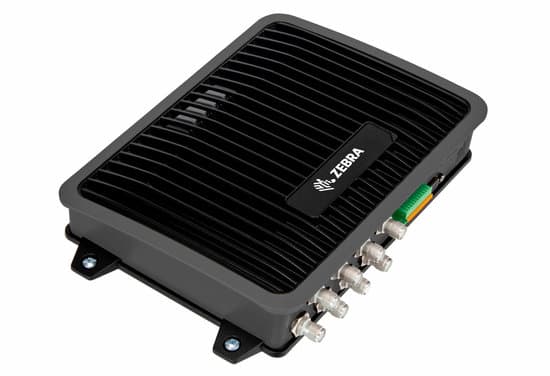
Fixed Readers
Continuously excite nearby RFID tags at choke points (portals, doors, zones). Correct positioning, orientation, and antenna tuning is critical for 100% readability.
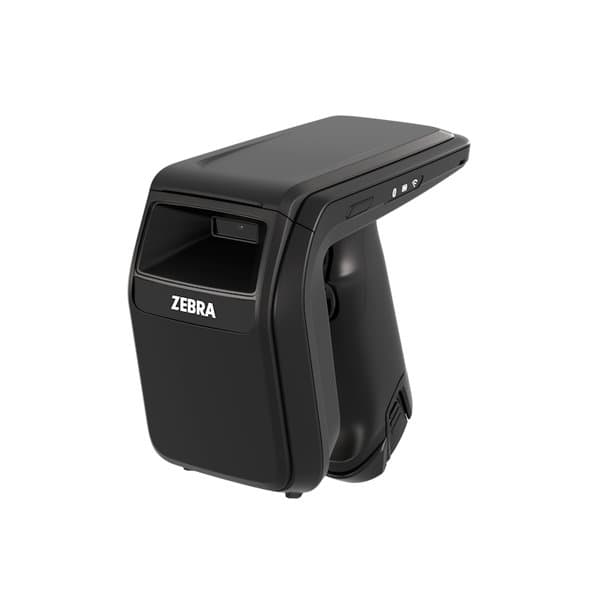
Handheld Readers
Trigger nearby tag responses for product location, accurate identification, and rapid bulk stocktakes and cycle counts.
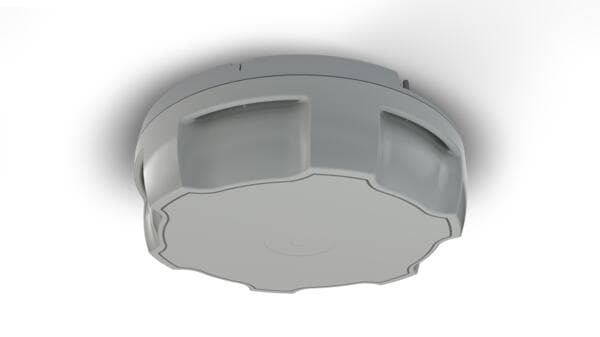
Array Readers
Omnidirectional fixed readers that triangulate exact tag positions within centimetres. One reader per ~120 sqm.
Tag types include:
- Labels with printed barcodes — costing cents, typically replacing traditional barcodes
- Stainless autoclavable tags for sterilisable devices like trolleys (~$20)
- Inert glass tags — swallowable or subcutaneously implantable
- Micro tags for surgical equipment
- Zip tags for sealing and identifying bags
Active RFID Tags
Battery-powered tags that continuously signal. Used for real-time location across larger areas.
BLE Tags (Bluetooth Low Energy)
Most common active tags. Capture presence near readers at room level. Low-cost temporary tags for patients; longer-lasting tags ($25–$80) for permanent assets or staff. High-value assets often receive both passive and active tags.
Wi-Fi Access Points as Readers
Major brands (Aruba, Cisco, Extreme) now detect and transmit BLE signals, eliminating the need for specialised readers. Your existing Wi-Fi infrastructure can serve as your RFID reading network.
What This Means for NZ Businesses
The combination of lower hardware costs, enterprise software platforms like MWE, and the ability to leverage existing Wi-Fi infrastructure means RFID is no longer limited to large enterprises with deep pockets. SMEs can now access the same location intelligence that drives efficiency in global operations.
Synergic Technologies is Zebra’s certified New Zealand partner, bringing the specialised RFID engineering skills and local implementation experience that standard IT providers lack.