

Noël Thomson is a global supply chain expert and Co-founder of Synergic Technologies, which provides supply chain technology solutions to ambitious New Zealand businesses. Noël has 30+ years’ experience in supply chains, manufacturing and technology, and has helped many businesses implement supply chain planning, including Fonterra global operations.
Inventory Types
Your inventory includes stock you’re holding for manufacturing in your supply chain, third-party logistics, and in delivering to your customers to earn sales revenue.
For exporters, inventory is typically raw materials, packaging, work-in-process and finished goods.
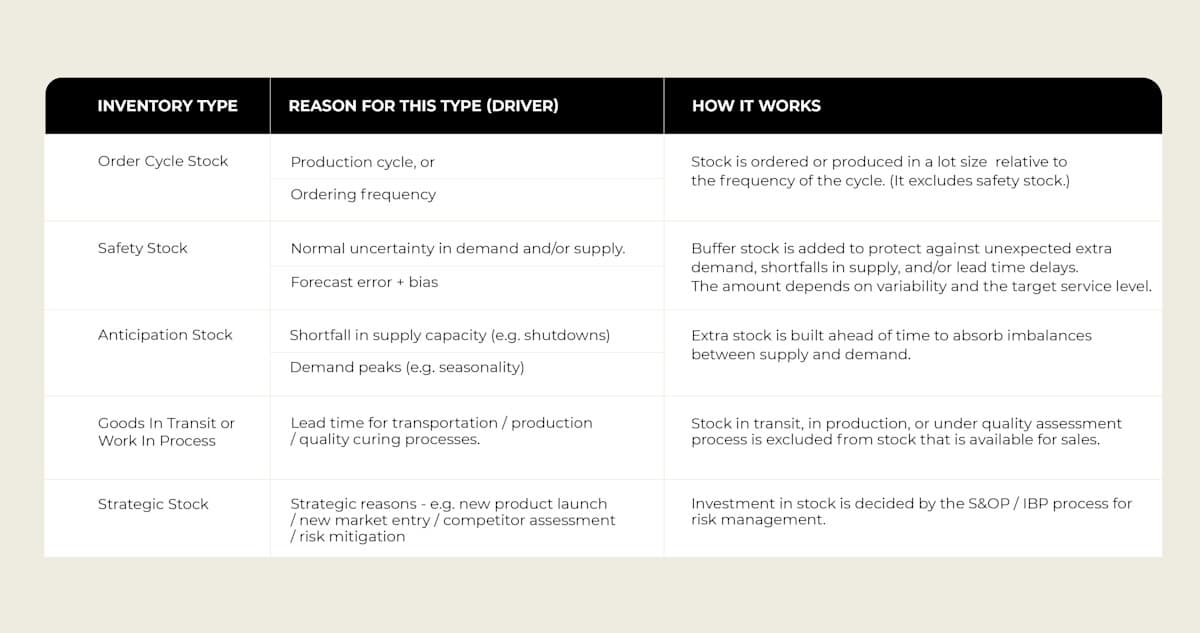
Most Common Inventory Types
How Good Data Helps
If you have good data and formulae to manage your inventory, you’ll be better positioned to deal with uncertainty around supply and demand.
Don’t underestimate the value of good quality data in helping to reduce stock-outs (running out of stock), unhappy customers, and lost profits. It will also help improve efficiencies and reduce costs.
Which metrics are important to your business will depend on your objectives and strategy.
Classic Inventory KPIs You Can Measure and Monitor
Inventory Management Strategies
The following strategies can be used to make your product more accessible to different markets:
Demand Forecasting
Demand forecasting lets you assess the potential demand for your product so you can prepare for the inventory required. It will improve your chances of having the right materials in the right quantity at the right time and place to fulfil orders. It’s important to forecast for several time horizons, both for planning purposes and accessing working capital.
Cross-Docking
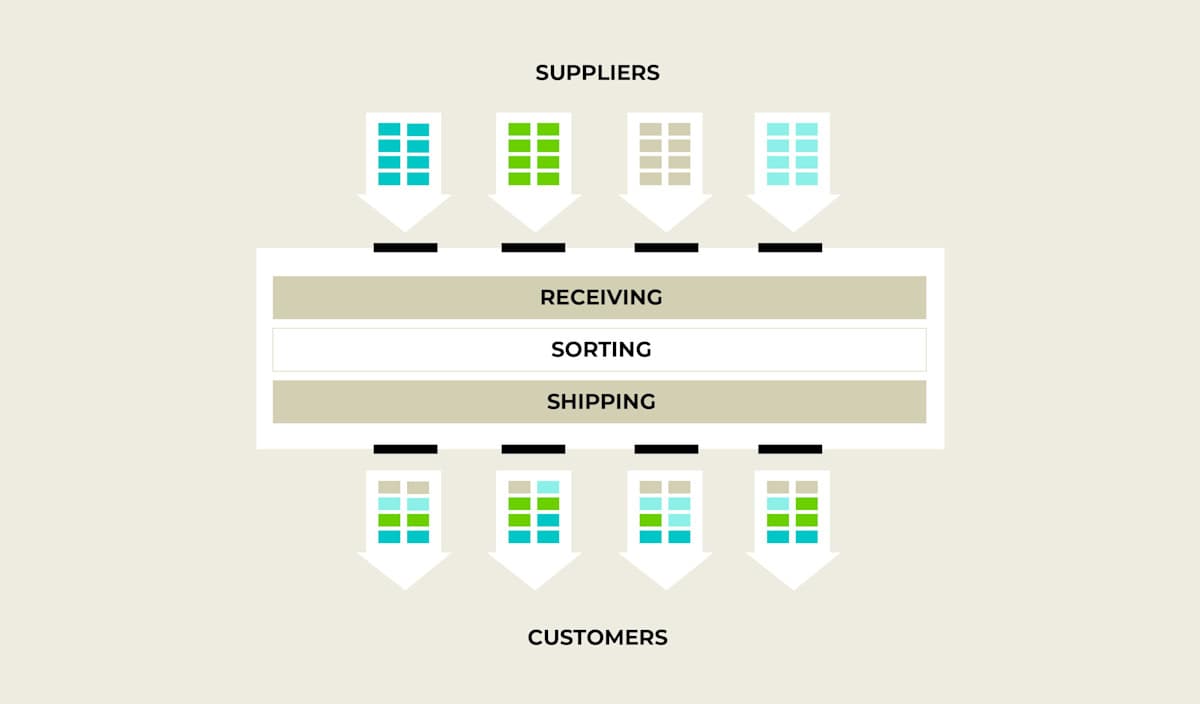
Cross-docking is a way to reduce the amount of inventory you hold, while also allowing you to buy in bulk, manufacture your product efficiently, and be efficient with your freight. It allows you to receive full truckloads of bulk goods from different suppliers (at your facility), quickly sort them and send full truckloads of mixed goods out to your customers. As a result, you’ll benefit from economies of scale when purchasing, producing and freighting goods. With this strategy, no inventory is held on site for long.
Omni-Channel Inventory
This is becoming more important, especially with the growth of online shopping. An omni-channel strategy lets your customers choose what platform they buy your products on. These orders are fulfilled from your warehouse inventory, direct from your retailers or anywhere else you’re selling your goods.
Drop Shipping
Drop shipping involves inventory coming directly from the manufacturer, so there’s no need for intermediary logistics or stock holding.
The Risks of Poor Inventory Management
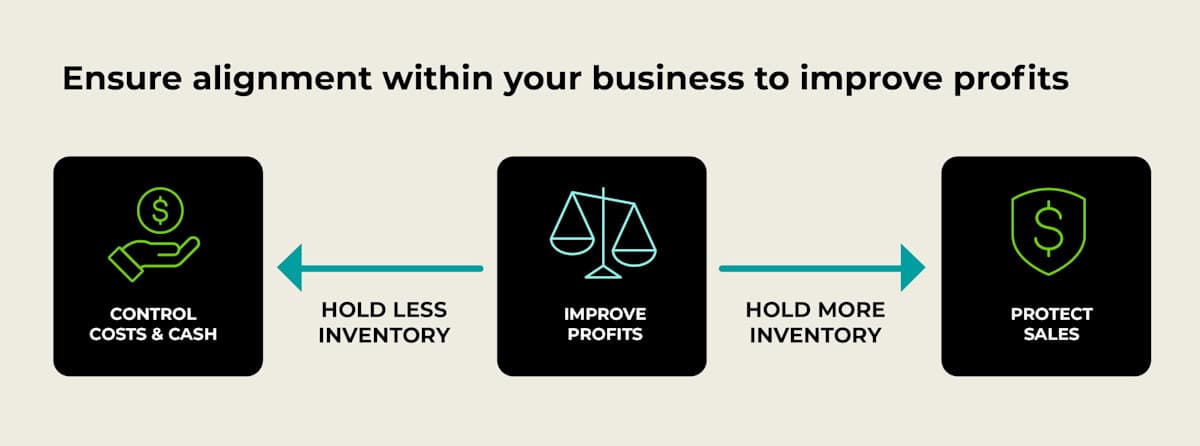
Poor inventory management can result in lost profits. It’s crucial to manage working capital well so that its effects on your cash flow and balance sheet are positive. This is especially important for growing or evolving businesses.
First Control, Then Optimise Inventory
First you want to control your inventory and then you want to optimise it. These are slightly different things.
Inventory Control
This is all about making sure you have good practices in your warehouse, your purchasing team, and your sales and customer service teams.
It’s crucial to know what inventory you currently have on hand. Most businesses use a combination of cycle counting and stock taking to ensure inventory is accurate.
Cycle Counting
A proportion of stock is counted at predetermined regular intervals (usually daily or weekly). You don’t have to stop production to do these counts, and the result is smoother daily operations.
Stock Taking
Counting all stock at a given time (usually annually for audited financial reports). The easiest way to keep on top of inventory counts is by using technology such as RFID or barcode scanning.
It’s really important to understand the shelf life of your inventory and control the flow of batches (stock). Some key strategies are outlined below.
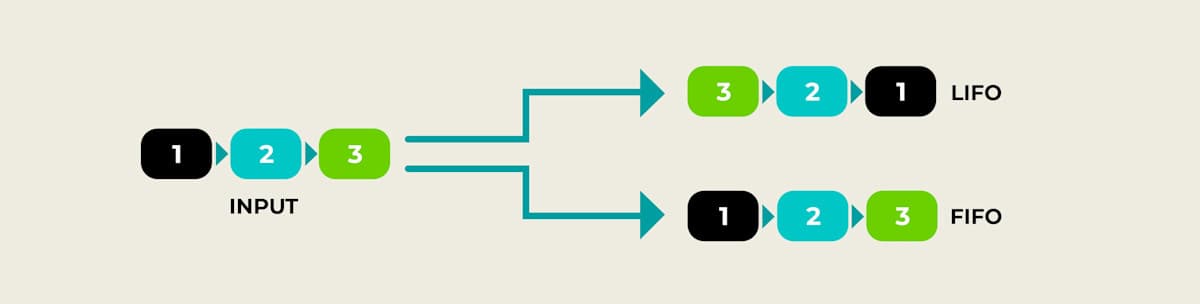
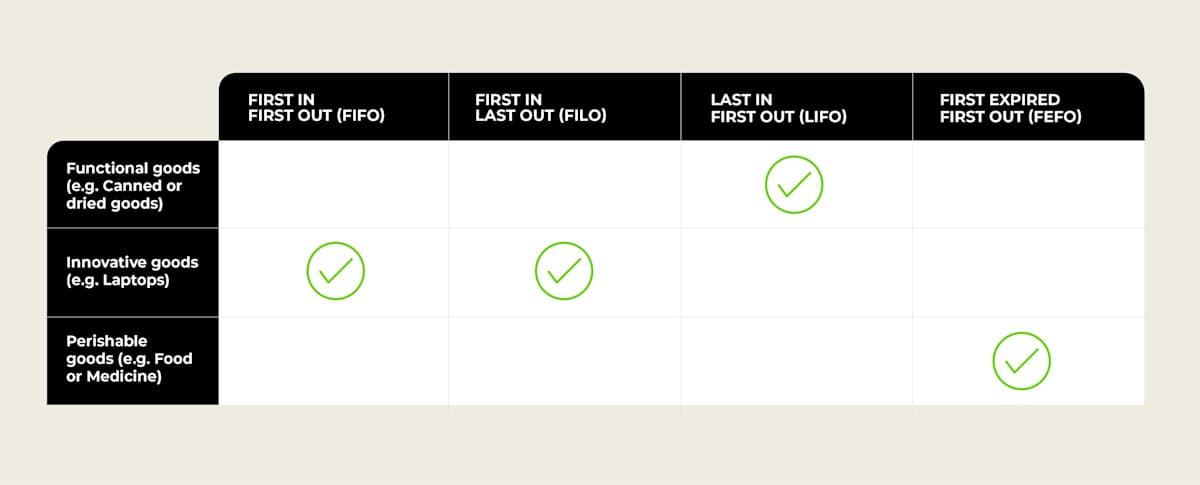
Shrinkage is the gradual reduction in inventory over time. To some degree, it’s almost guaranteed, so the ideal situation is to keep it as low as possible. Shrinkage can be due to:
Inventory Optimisation
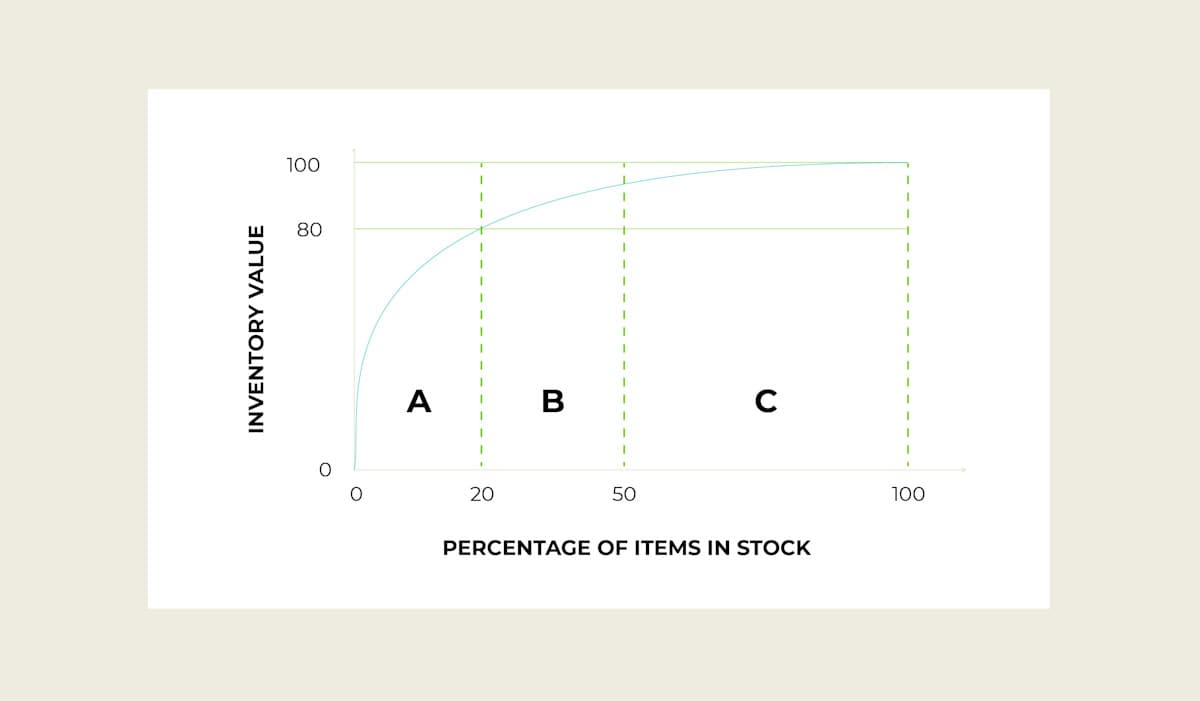
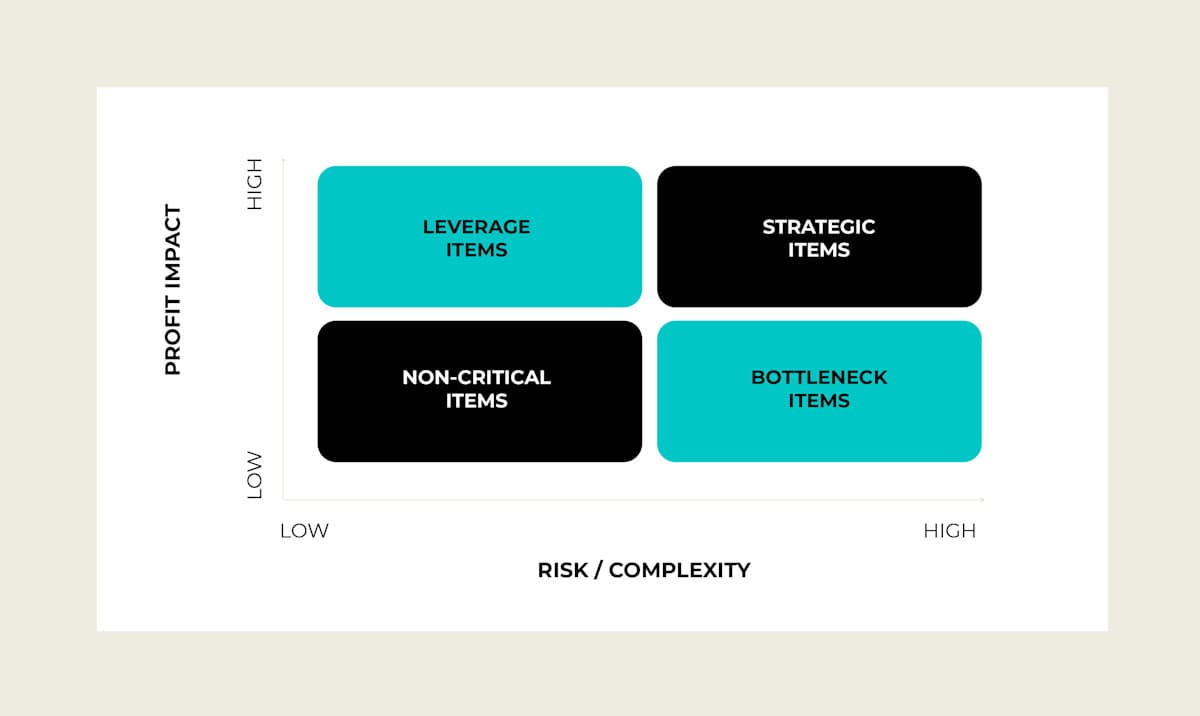
Inventory optimisation means getting the best out of your inventory and there are numerous tools to help you do this. ABC analysis and the Kraljic matrix are just two of them.
How ABC Analysis Works
ABC analysis follows the Pareto principle: 80% of the inventory value is accounted for by 20% of the items in stock.
ABC analysis is great for categorising the importance of inventory based on its value to the business. It can also help you decide how you want to lay out your warehouse to be more efficient.
The Kraljic Matrix
The Kraljic matrix is a useful tool to help you determine which goods should be prioritised and always kept in stock (i.e. finished goods), and which items have lower critical risk and should require less effort (i.e. stationery).
How to Replenish Your Stocks
Once your inventory policy has been set (i.e. you never run out of strategic items), there are some best practice techniques for replenishing inventory. Some methods deal well with known drivers of demand (deterministic methods), while others are better for random demand (stochastic methods).
Popular Replenishment Techniques
The goal: don’t run out of stock, and prioritise your efforts.
Minimum Order Quantity
Setting a minimum order quantity based on a minimum number of SKUs, the volume you want to produce, or a dollar value for the order, can help you avoid processing large amounts of small transactions.
2-Bin System
Inventory is kept in 2 bins. Once the first bin is empty, replacement inventory is ordered. The bins must be large enough that one can cover at least until the replenishment order is received. This approach is typically used to replenish small, low-value goods, such as nuts and bolts in an engineering workshop.
Reorder Point Calculation
Gives you a good indication of when you should reorder to avoid running out of stock. The reorder point formula = (average daily sales × average days of lead time) + safety stock.
Kanban
An extension of the 2-bin method, where suppliers are included in the system in a just-in-time (JIT) philosophy. Kanban can be used with short lead-time items with relatively consistent demand, such as injection-moulded components in manufacturing.
Materials Requirements Planning
Used for more complex supply items linked to a sales forecast and bills of material (BOM).
Pooling
Centralises inventory, and multi-echelon inventory optimisation combines multiple supply levels to help companies leverage and optimise inventory throughout their distribution networks.
Just-in-Time (JIT)
Inventory which arrives as it’s needed, has several cost benefits.
Just-in-Case (JIC)
Inventory buffers supply chain disruptions and has become more widely used during the pandemic.
Building resilience into your supply chain is important. This could be in the form of increasing inventory to reduce the risk of running out of stock due to supplier delays. It’s important to keep waste minimal when building resilience.
Benefits of Good Inventory Management
Businesses that focus on managing and optimising their inventory:
Original source: Increase your profits with good inventory management — myNZTE, New Zealand Trade and Enterprise. Reviewed 18 May 2026.